The Crucial Task of Identifying Moldy Cannabis
For cannabis consumers, recognizing moldy weed is essential for health and safety. Mold on cannabis not only ruins the product but can also pose serious health risks, especially for individuals with compromised immune systems or allergies.
Signs of Moldy Cannabis
- Visual Inspection:
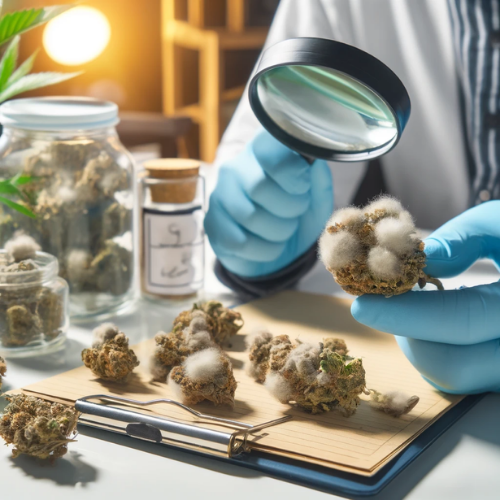
- White, Powdery Substance: Mold often appears as a powdery, white substance on the leaves or buds. It can sometimes be mistaken for trichomes (the tiny, crystal-like structures on the surface of the buds).
- Discoloration: Look for unusual spots or a grayish-green color.
- Smell Test:
- Musty or Mildewy Odor: Moldy cannabis often has a distinct musty or mildewy smell, different from the natural, earthy aroma of healthy cannabis.
- Texture:
- Unusual Texture: Moldy buds may feel damp, spongy, or crumble easily when touched.
Advanced Detection Techniques
- Magnification: Using a magnifying glass or a jeweler’s loupe can help identify the finer details that distinguish mold from trichomes.
- Black Light Test: Under a black light, moldy areas on cannabis can appear green or yellow.
The Dangers of Consuming Moldy Cannabis
- Health Risks: Consuming moldy cannabis can lead to respiratory issues, allergic reactions, and other health problems.
- Potency and Flavor: Mold not only compromises the health safety of cannabis but also degrades its potency and flavor.
Best Practices for Preventing Mold Growth
- Proper Storage: Store cannabis in a cool, dark place in an airtight container to control humidity and temperature.
- Regular Checks: Regularly inspect your cannabis for signs of mold, especially if stored for long periods.
Moldy Cannabis in Los Angeles
In Los Angeles, where humidity levels can fluctuate, it's particularly important to be vigilant about mold in cannabis. For more information on safe storage practices and where to find quality, mold-free cannabis in LA, visit atriumstore.com.
Mold Awareness in the Cannabis Community
- Educated Consumers: Being informed about the signs of mold and how to prevent it is crucial for anyone in the cannabis community.
- Quality Control: Purchasing cannabis from reputable dispensaries, where products are regularly tested, can reduce the risk of encountering mold.
Conclusion
Identifying and avoiding moldy cannabis is a vital skill for ensuring a safe and enjoyable cannabis experience. By knowing what to look for and how to store your cannabis properly, you can protect yourself from the potential health risks associated with mold. For residents of Los Angeles, atriumstore.com offers a wealth of information on selecting and caring for high-quality cannabis products.
Moldy Weed vs. Trichomes: How to Tell the Difference
The most common mistake consumers make is confusing mold with trichomes — the fine, crystal-like glands that cover quality cannabis buds. Trichomes are:
- Uniformly distributed across the bud surface
- Sparkly, glistening, and almost translucent when viewed under light
- Sticky to the touch
What Causes Mold on Cannabis?
Cannabis mold — most commonly Botrytis cinerea (bud rot) or Aspergillus — thrives in high-humidity environments, typically above 65% relative humidity. Mold can develop during cultivation, during the curing process if humidity isn't controlled, or in storage if buds are sealed in an airtight container while still too moist. Purchasing from licensed dispensaries in California significantly reduces this risk because state regulations require third-party testing for mold and pathogens.
How to Store Cannabis to Prevent Mold
- Store flower in an airtight glass jar (not plastic) at 55–65% relative humidity.
- Use two-way humidity packs (62% Boveda or equivalent) to maintain stable moisture levels.
- Keep jars away from light and heat — a cool, dark drawer or cabinet works well.
- Do not store cannabis in the refrigerator, where humidity fluctuations cause condensation.
Health Risks of Smoking Moldy Weed
Inhaling mold spores can cause respiratory irritation in healthy adults and serious pulmonary infections in immunocompromised individuals. Aspergillus mold in particular can cause a condition called aspergillosis, which can be life-threatening for people with weakened immune systems. If you find mold on your cannabis, discard it — no amount of drying it out makes it safe to smoke.



.png&w=1200&q=75)