What is Myrcene?
Myrcene, also sometimes called beta myrcene, is a monoterpene and a significant component of numerous plants and fruits. It is produced mainly semi-synthetically from Myrcia, a genus of flowering shrubs native to South America. Myrcene has been used for centuries as an essential oil in culinary and perfume use, and more recently as a food additive and flavoring agent in the manufacture of food and beverages.
Myrcene is known to help with sleep, relaxation, inflammation, pain relief, and even cancer prevention. It is also believed to have anti-bacterial properties that can help to avoid illness. In addition to its medicinal uses, myrcene has been used in cosmetics, soaps, detergents, and other products due to its pleasant aroma.
Overall, myrcene is an important terpene found in many plants that has many potential health benefits. Its unique scent makes it popular for use in culinary applications as well as cosmetics and perfumes. Additionally, its medicinal properties make it an attractive option for those looking for natural remedies for various ailments.
Aroma and flavor profile
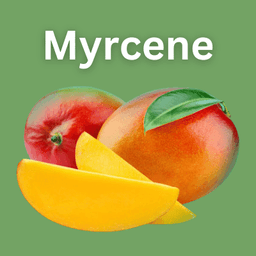
Myrcene smells the way a walk-in humidor of flower tastes: earthy, musky, and a little sweet, with notes of clove, ripe mango, and damp forest floor. If a strain reads as "dank" rather than bright or fruity, myrcene is usually doing the heavy lifting. Outside cannabis it shows up in hops, lemongrass, thyme, and mangoes — the hop connection is why myrcene-heavy flower and a hoppy IPA share a flavor family.
On the palate, myrcene-forward strains lean herbal and earthy with a slightly peppery finish. It is the most abundant terpene in modern commercial cannabis, so even when it is not the dominant note, it is usually somewhere in the blend.
What the research says
Myrcene is the terpene most associated with the classic "couch-lock" body effect, and strain lore holds that high-myrcene flower feels more sedating. Controlled human evidence is still thin, but animal studies have found analgesic and anti-inflammatory activity, and myrcene is one of the better-studied terpenes in preclinical models. The honest summary: the sedation reputation matches most consumers' experience, but the science is still catching up.
You may have heard that eating a mango before consuming cannabis intensifies the high because mangoes contain myrcene. It is a great story and exactly that — a story. No controlled study has demonstrated the effect, and the myrcene dose in a mango is small next to what a myrcene-dominant strain already contains. Enjoy the mango; credit the flower.
Consumption and storage notes
Myrcene vaporizes at roughly 166°C (331°F) — one of the lower boiling points among common cannabis terpenes. Lower-temperature vaping preserves more of it, which is part of why the first pulls on a fresh cart taste earthier than the last. Like all terpenes it is volatile: flower stored warm, dry, or unsealed loses myrcene first, and the flavor goes flat before the potency does.
Shopping for myrcene-rich flower at Atrium
Myrcene dominance tracks loosely with indica-labeled flower: OG Kush, Granddaddy Purple, Blue Dream, and 9 Pound Hammer are classic myrcene-forward cultivars. Labels lie sometimes, though — the reliable check is the Certificate of Analysis, which lists the top terpenes by weight for that specific batch. Ask our budtenders to show you the COA, or browse the current flower menu and look for earthy, musky strain descriptions.
.png&w=1200&q=75)
.png&w=256&q=75)